The Fed raised interest rates by 25 basis points to 3.75%–4.00% as expected. Importantly, policymakers are also projecting further tightening, with most officials expecting at least one more rate hike this year. This confirms that the Fed remains focused on elevated inflation and is not treating today’s move as necessarily the end of the tightening cycle.
This is important for the US dollar. Higher US rates and yields can make the dollar more attractive compared with currencies such as the euro, especially if the interest-rate differential between the US and Europe continues to move in favour of the dollar.
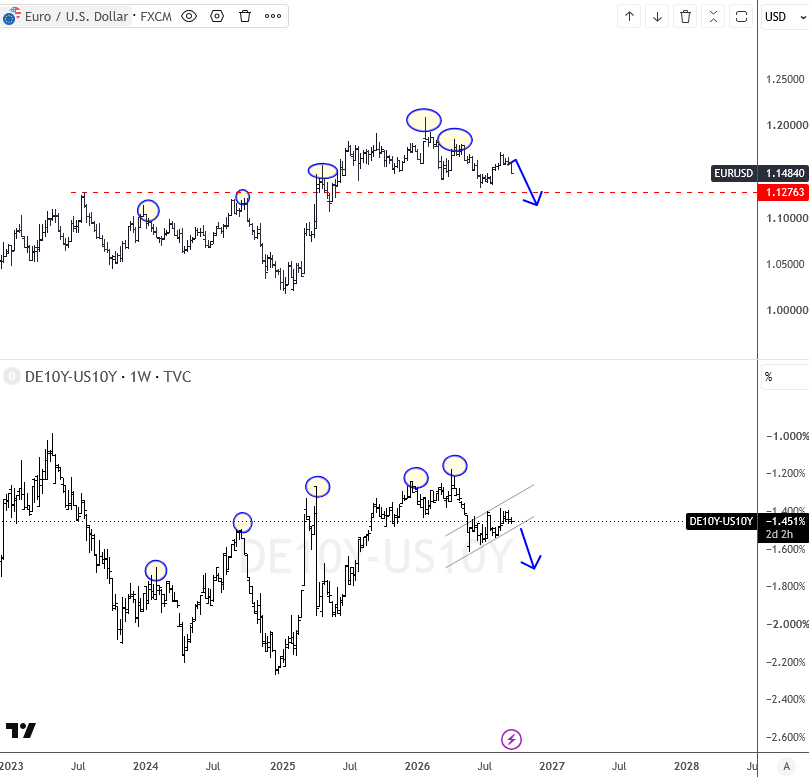
Looking at our chart, EURUSD and the German-US 10-year yield spread have shown a very strong correlation over the last few years. Notice how several important turning points in the yield spread have also been followed by similar turns in EURUSD.
The German-US 10-year yield spread is now testing an important trend line support. If it breaks lower from the current bearish flag, that would suggest that US yields are becoming even more attractive relative to German yields. In such a case, EURUSD could remain under pressure.
From a technical perspective, EURUSD is already turning lower from its recent highs. If the yield spread confirms the bearish breakout, we would not be surprised to see the euro extend lower towards the 1.1270 area in the weeks or months ahead.
So while today’s Fed hike was widely expected, the more important question is what comes next. If the Fed remains hawkish and US yields stay elevated relative to European yields, this intermarket relationship could continue to favour a stronger US dollar and a weaker euro.
Become a premium member
Get daily Elliott Wave updates for US Single Stocks, SP500,DAX, GOLD, SILVER, CRUDE, FX, CRYPTO, etc. or apply for unlimited access to the Elliot Wave educational videos.