On September 7, we highlighted the 1.1640–1.1660 area as an important resistance zone for EURUSD after the pair had already experienced a five-wave decline from the 1.1711 high. At the time, EURUSD had stabilized following the stronger-than-expected US jobs report, and we expected the corrective recovery to potentially become more complex before another leg lower. We specifically pointed to 1.1640 as the first resistance level, followed by 1.1660, while 1.1566 was identified as an important level to watch on the downside.
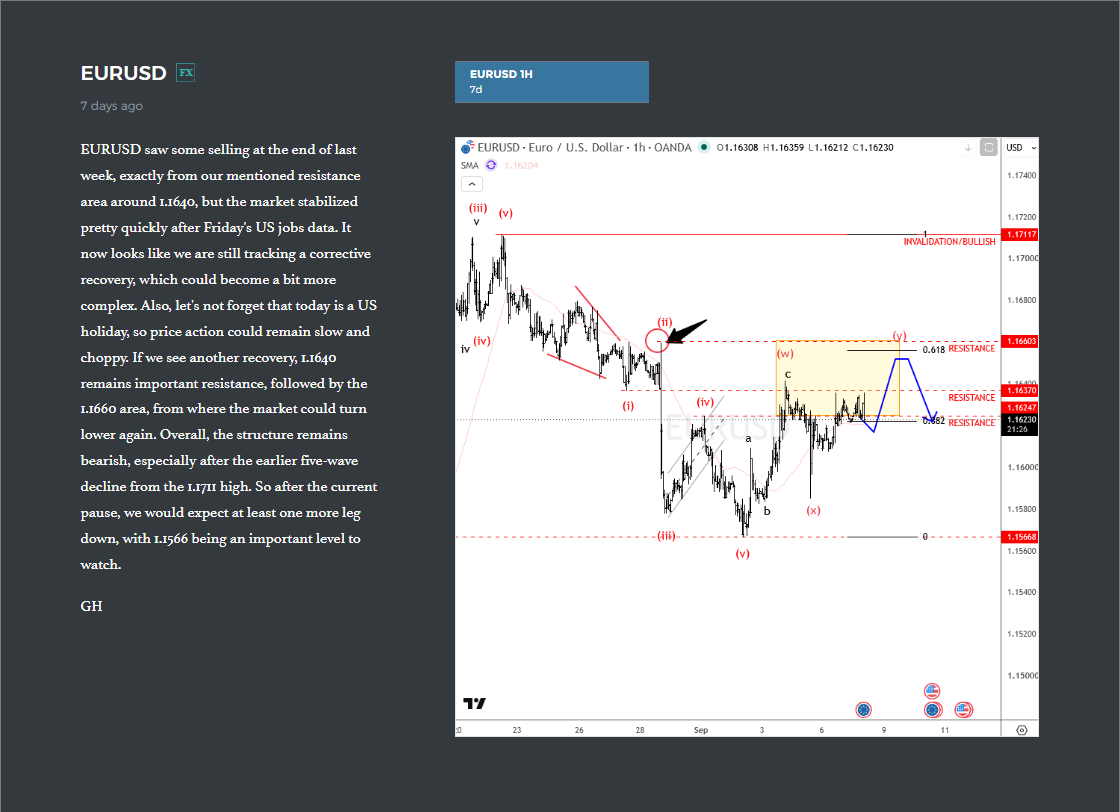
That scenario played out nicely, as EURUSD eventually turned lower from the highlighted 1.1630–1.1660 resistance area and has since moved below the 1.1566 level. The latest price action is now much more bearish, with EURUSD appearing to develop a new impulsive decline. This could represent wave C of the ongoing correction or potentially part of a new higher-degree bearish impulse, possibly wave three.
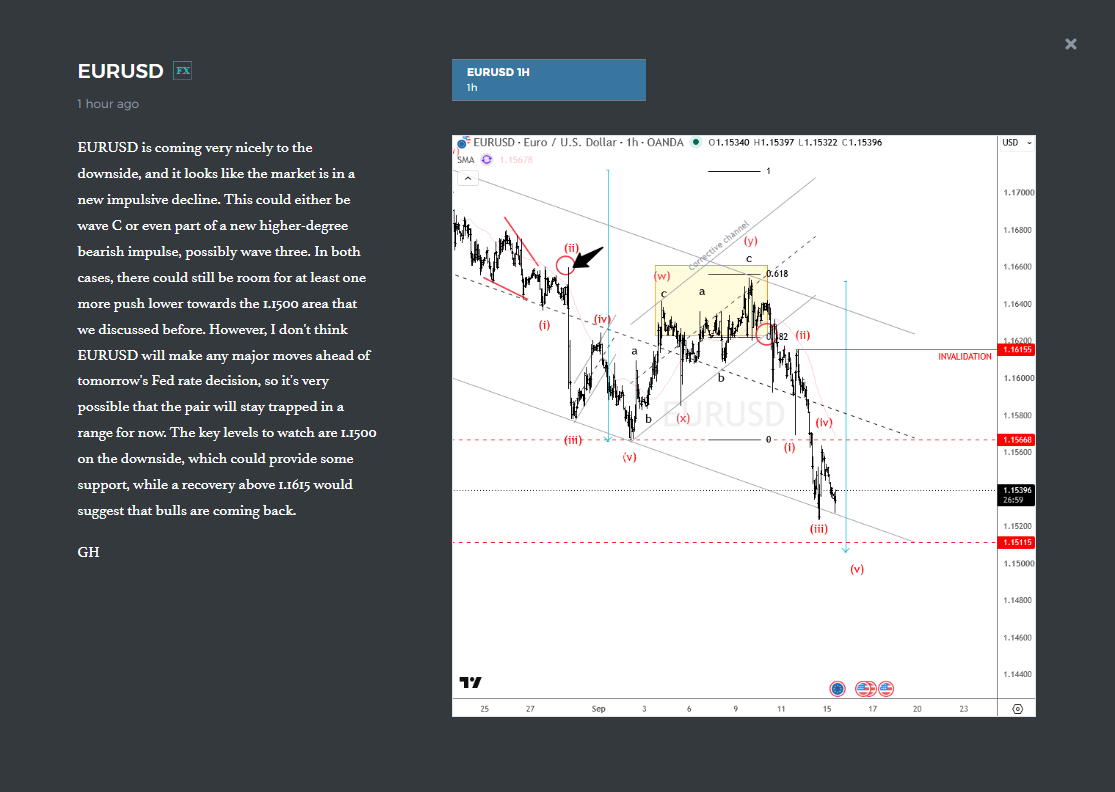
With the bearish structure still developing, there could be room for at least one more push lower toward the 1.1500 area, which was already discussed in our previous update. However, with tomorrow’s Fed rate decision approaching, we would not expect a major directional move before the event, and EURUSD could remain trapped in a range in the short term.
For now, 1.1500 is the key downside level to watch, as it could provide support and trigger a short-term recovery. On the upside, a recovery above 1.1615 would be an early indication that bulls are starting to regain control. Until then, the current structure continues to favor further downside.
Become a premium member
Get daily Elliott Wave updates for US Single Stocks, SP500,DAX, GOLD, SILVER, CRUDE, FX, CRYPTO, etc. or apply for unlimited access to the Elliot Wave educational videos.